Microsoft on MWC 2019 - Thoughts After Watching
Computing is embedded in our life.
It is not combined in a single device.
Microsoft, which rarely shows up at MWC, brought out its boss Satya Nadella this time for a product launch, so it must mean something big. Before the event the media had already guessed that Microsoft would launch the next-generation HoloLens this time, bringing more improvements, speeding up Mixed Reality's integration into the world, and entering this huge market. The big tech bloggers and YouTubers read the teaser video as: a carbon-fiber frame, a new chip.
After a pile of blather, Ms. Julia came on stage. She mainly presented the state of Microsoft's cloud services. She presented solutions the Azure services had previously given customers, and mentioned IoT and some other stuff normal people don't really care about. Microsoft is doing really well with its B2B services now.
After that came the breathtakingly exciting part: HoloLens 2. The look is actually about the same; it isn't the most striking feature. Actually, for me personally, every appearance of Alex Kipman means a huge step forward for Microsoft in computer graphics, and his own abilities are truly outstanding too; the Kinect development experience on his résumé alone already means he is fit to lead this area.
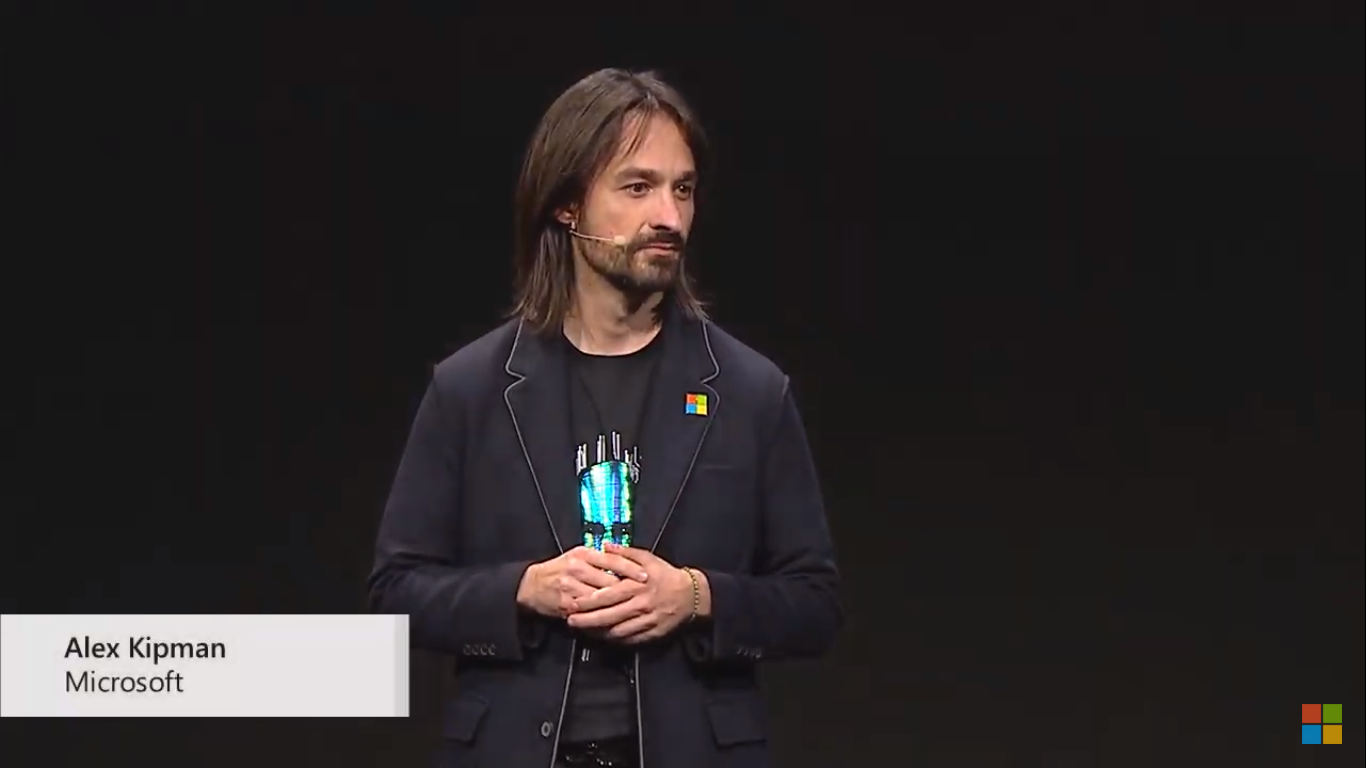
First, Alex Kipman showed us what HoloLens 2 looks like.
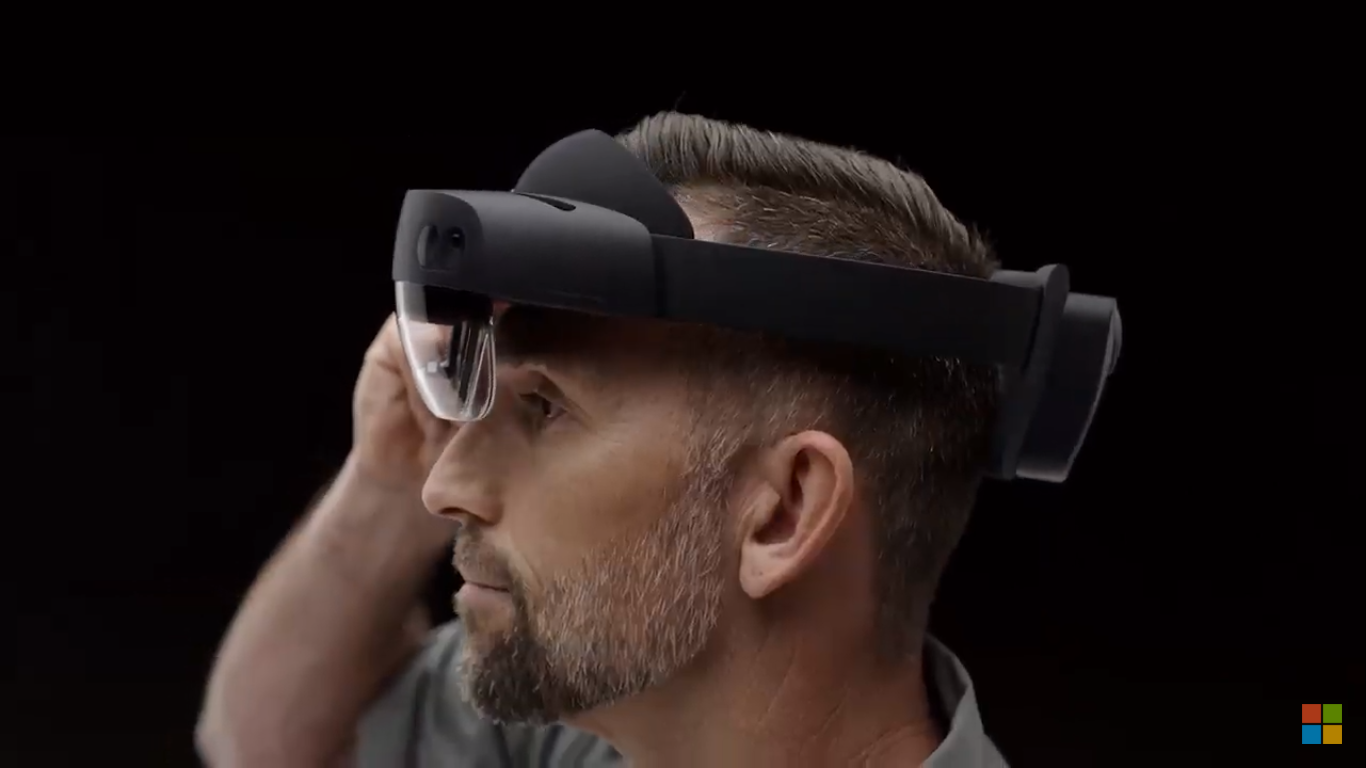
Then Alex Kipman explained this generation of HoloLens's improvements in three areas: FOV (field of view), comfort, and one thing I don't quite remember.
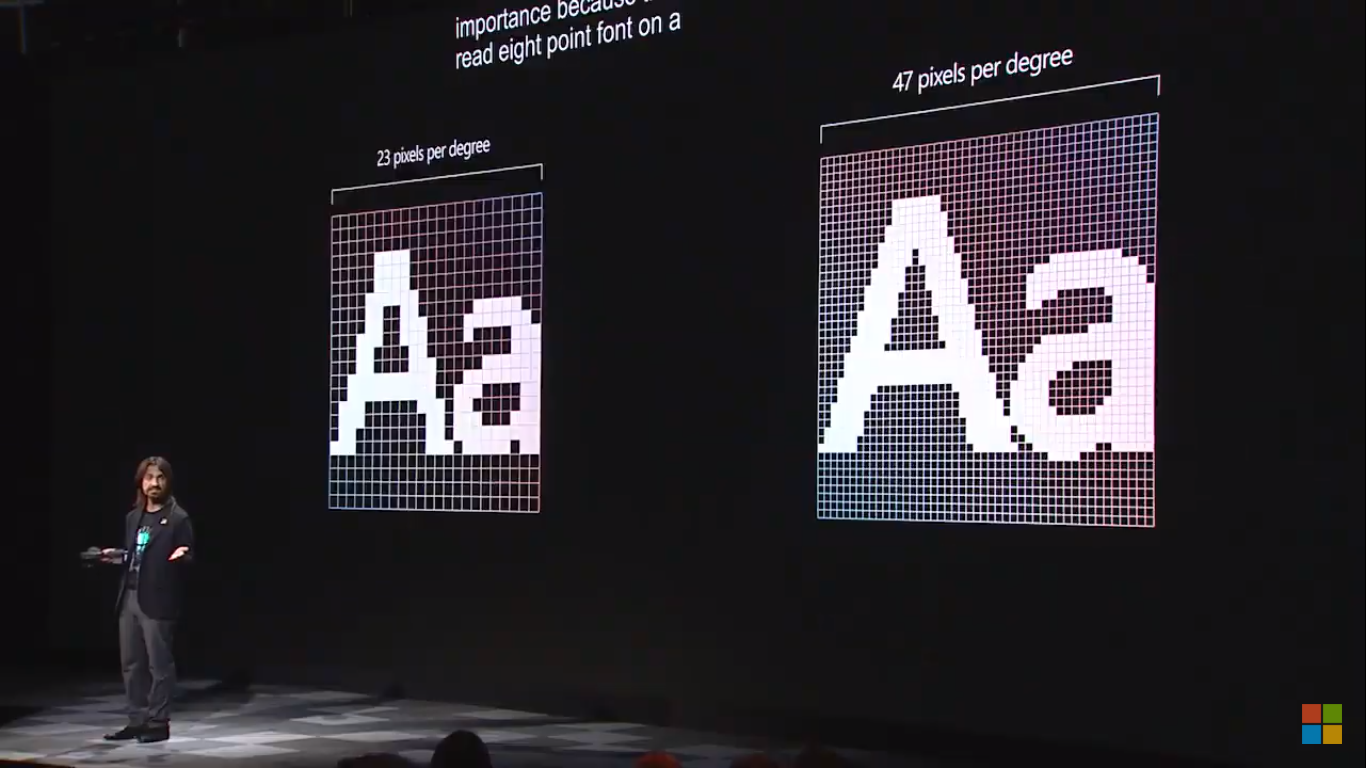
The Field of View has doubled compared to the previous generation, from a pitiful 40° up to 80°. This is the biggest improvement; according to Alex, this generation, HoloLens 2, squeezes a 2K screen in front of your eyes.
Comfort mainly comes down to the carbon-fiber body and its advanced way of interacting. This is true human–computer interaction; Microsoft's idea is “picking it up quickly without having any idea how this thing is used”, and it integrates a more powerful Kinect-like scanning system. Thanks to this updated technology, our hands can be fully modeled in the system, which gives our hands the ability to touch holograms.
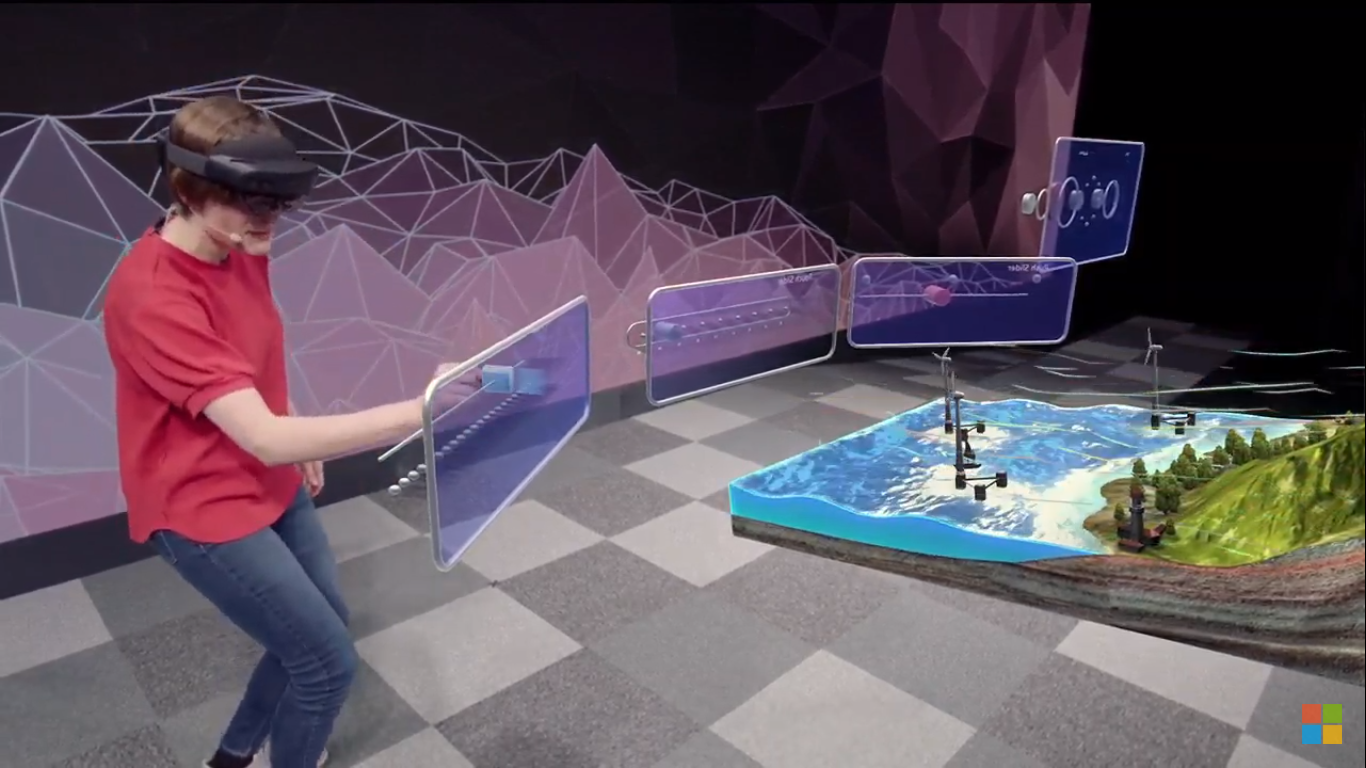
These are all very exciting innovations, bringing many people one step closer to the future world they have dreamed of.
After that, Microsoft invited several partners on stage to talk together about the value HoloLens brings to the world. These companies included Spatial, Trimble (one of the companies I'm very interested in), and Epic Games. I think HoloLens won't lack opportunities for applications, whether in architecture, medicine or entertainment.
As a developer who has followed Microsoft for many years, I personally pay close attention to how its ecosystem is laid out. And Alex Kipman, after describing the vision, gave the Three Principles. Honestly, being a Microsoft fan is something I have never regretted.
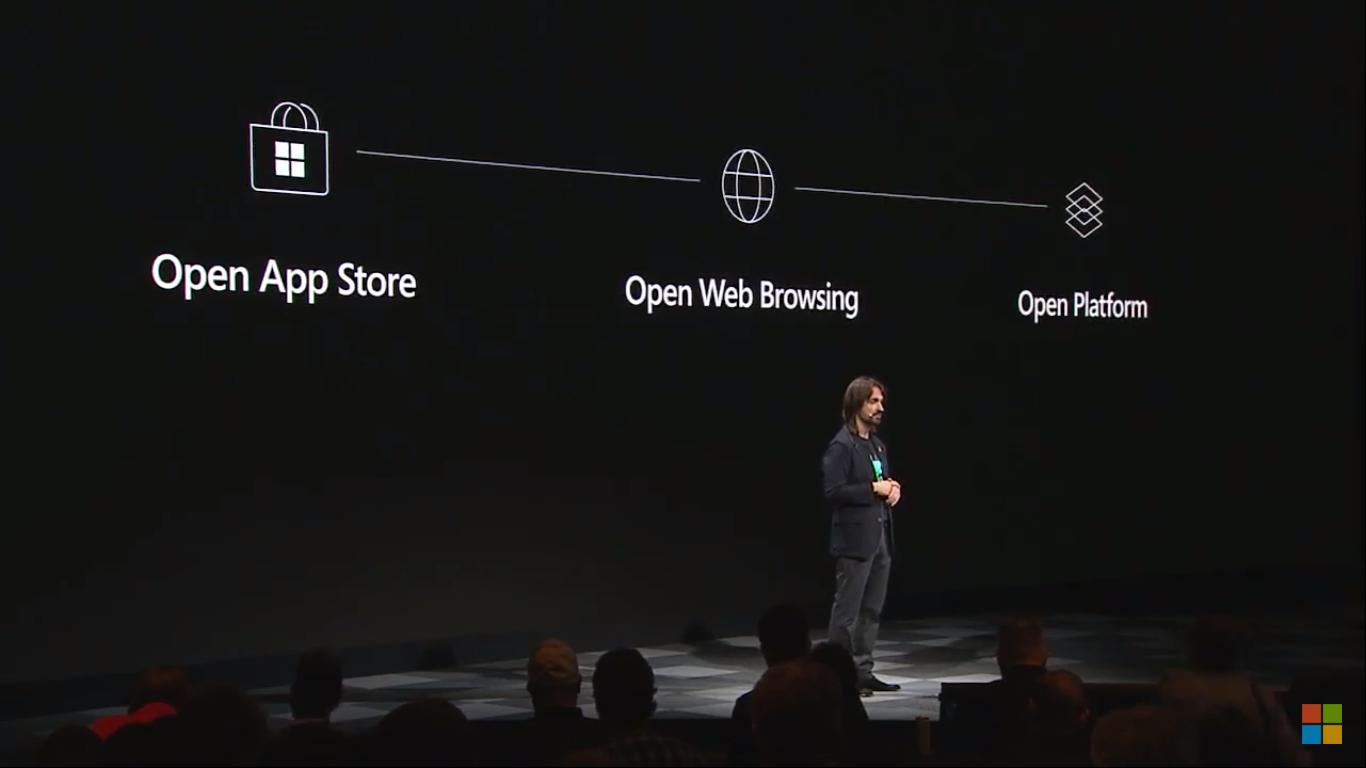
About these three Opens, I'm really happy. I can dream of a day when technology helps humans do anything, in a human way. This time it has rekindled the purpose I strive for: it is precisely to learn and develop technology like this, and to work with people like these.
Finally, let me share my feelings about Microsoft. As a post-00s developer who has been watching since Build 2012, I get to see new things from Microsoft every year. Windows 8 in 2012, HoloLens 1 and Windows 10 in 2015 along with its UWP grand-unification ambitions (though that went cold), then Fluent Design, and now HoloLens 2: every one of them has gotten me excited like crazy for a long time.
I just love good technology.
Good night, I wish you all the best on your way, and I'll work hard to come and find you, Microsoft.